CEYLONESE TEA


“I must drink lots of tea or I cannot work. Tea unleashes the potential which slumbers in the depth of my soul.”

-Leo Tolstoy.

INTRODUCTION OF TEA INDUSTRY TO SRI LANKA


Sri Lanka is a home for 21 million people which resides in south of Asia. Sri lanka is an Island which consist of a great geographical location and a shape, due to those factors it is known as "the Pearl of the Indian ocean". The Island is also known as "teardrop of the Indian Ocean", "Serandib","Resplendent Island" and "Ceylon". Due to the valuable resources prevailed within the country various nations tried to invade Ceylon and export good for a better income. In 1820s, British has captured the country and were experimenting on coffee plantations and at the time of 1869, coffee plantation got a new plant disease and wiped out all the coffee plantations grown in Ceylon. After a decade, Tea plantations was introduced to Ceylon which until the present remians one of the leading industries in Sri Lanka.


HISTORY OF TEA INDUSTRY IN SRI LANKA


History Image 1

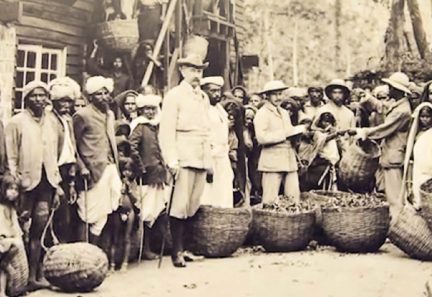
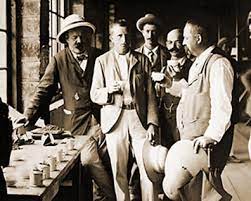
It was as far back as the year 1824 in which the British brought a tea plant from China to Ceylon (as Sri Lanka was known at the time). It was planted in the Royal Botanical Gardens, Peradeniya and is considered to have been the first non-commercial tea plant in Sri Lanka. After nearly two decades in 1867, James Taylor, Scottish by origin, planted 19 acres of tea in the city of Kandy in Ceylon, at the Loolecondra Estate as the first commercial tea plantation. The eventual sale of Loolecondra teas resulted in 1872, in Kandy and the first tea consignment to London in 1873. These pioneering efforts were done by trial and error and improved over the years via the introduction and improvement of tea processing machines and methods, by different individuals and companies. The first broking firm John Brothers & Co. was established in 1876 and the first public Colombo auction took place in 1883 under the guidance of the Ceylon Chamber of Commerce (which was established in 1839). The Colombo Tea Traders' Association was formed in 1894 and in 1925 the Tea Research Institute was established. These organizations helped boost the production and export of Ceylon Teas in its early stages.


History image 2 History image 3


Regions and Area of tea grown in Sri Lanka


The tea-growing regions of Sri Lanka are clustered mostly among the mountains of the island's central massif and its southern foothils. Once thickly forested and largely inaccessible to humans, the central mountains were known to the ancient Sinhalese as Mayarata, the Country of Illusions. It was said to be haunted by demons and spirits. This fearsome reputation, together with more tangible threats posed by wild beasts, venomous snakes, landslides, rockfalls and the ever-present danger of simply losing one's way in the forest, kept most people away from the high hills. Settlement was almost nonexistent except in the valleys and around the city of Kandy. Only foresters, hermits and fugitives had any reason to enter the Mayarata. Thus it was that after the annexation of the Kandyan kingdom in 1815, the British found themselves in possession of vast tracts of virgin montaine forest. Imperial enterprise soon found a way of putting the acquisition to good use. By 1840, there were already about two hundred coffee-estates dotted about the hills; then came a boom in coffee on the London market, fuelling a land-rush. Down came the high forests, acre after acre, to be replaced by endless, regimented rows of coffee-bushes. At the peak of the coffee enterprise in 1878, no less than 113,000 ha. (278,000 acres) were under cultivation.
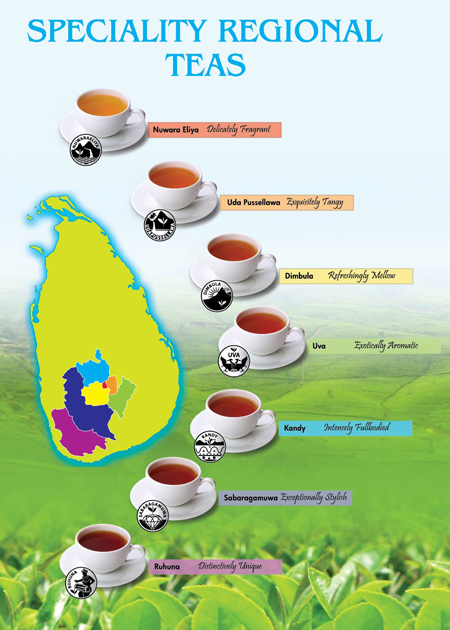

Sri Lankan Tea

  1. Low grown tea plantations-below 600m

    • Sabaragumwa
    • Ruhuna

  2. Mid grown tea plantations

    • Badulla
    • Kandy

  3. High Grown tea plantations

    • Uda Pussellawa
    • Dambulla
    • Nuwara Eliya

  4. Ramboda

  5. Hatton

  6. Ella

  7. Galle


6 MAJOR TYPES ON HOW TEA IS MADE

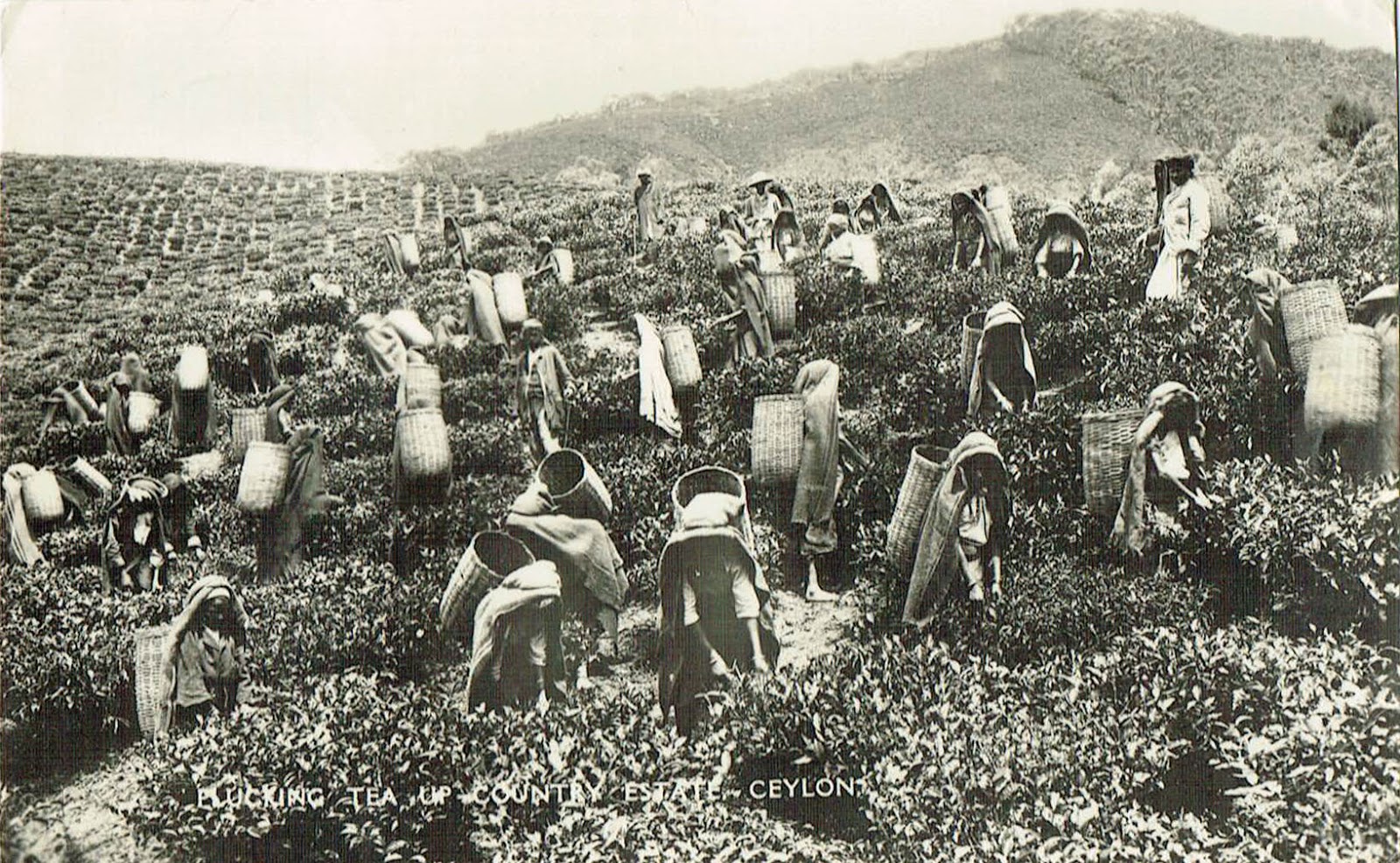
The tea manufacturing process is an intricate one that begins with the plucking of good leaf - two leaves and a bud and results in the final tea leaf that you see. Ceylon tea is manufactured predominantly using the orthodox tea manufacturing process that has been practised for over a century.
Although the following steps ensure the systematic manufacture of tea, the skill of the teamaker is crucial, as it is he who decides the exact timing, level and extent to which each step is executed, based on his experience and what kind of tea he finally wants. This is a process that comes with practice, knowledge and experience and cannot be merely replicated by anyone. The teamaker's role is therefore a vital one.

  1. Growing
  2. Withering
  3. Bruising
  4. Oxidizing
  5. Fixing
  6. Drying


EFFECTS OF HAVING TEA

Natural substances, called polyphenols, are found in both caffeinated and herbal teas. These substances are antioxidants, compounds that may help reduce the risk of certain chronic diseases. During processing, some of the polyphenols in tea are destroyed. Thus, tea powders, decaffeinated teas and bottled tea drinks may not offer the same health benefits. Additionally, research suggests that green teas offer a greater antioxidant punch compared to most other varieties. effects,

  • Weight management
  • Heart Health
  • Diabetes Cancer
  • Boost energy
  • Supports mental health
  • Aids digestion